
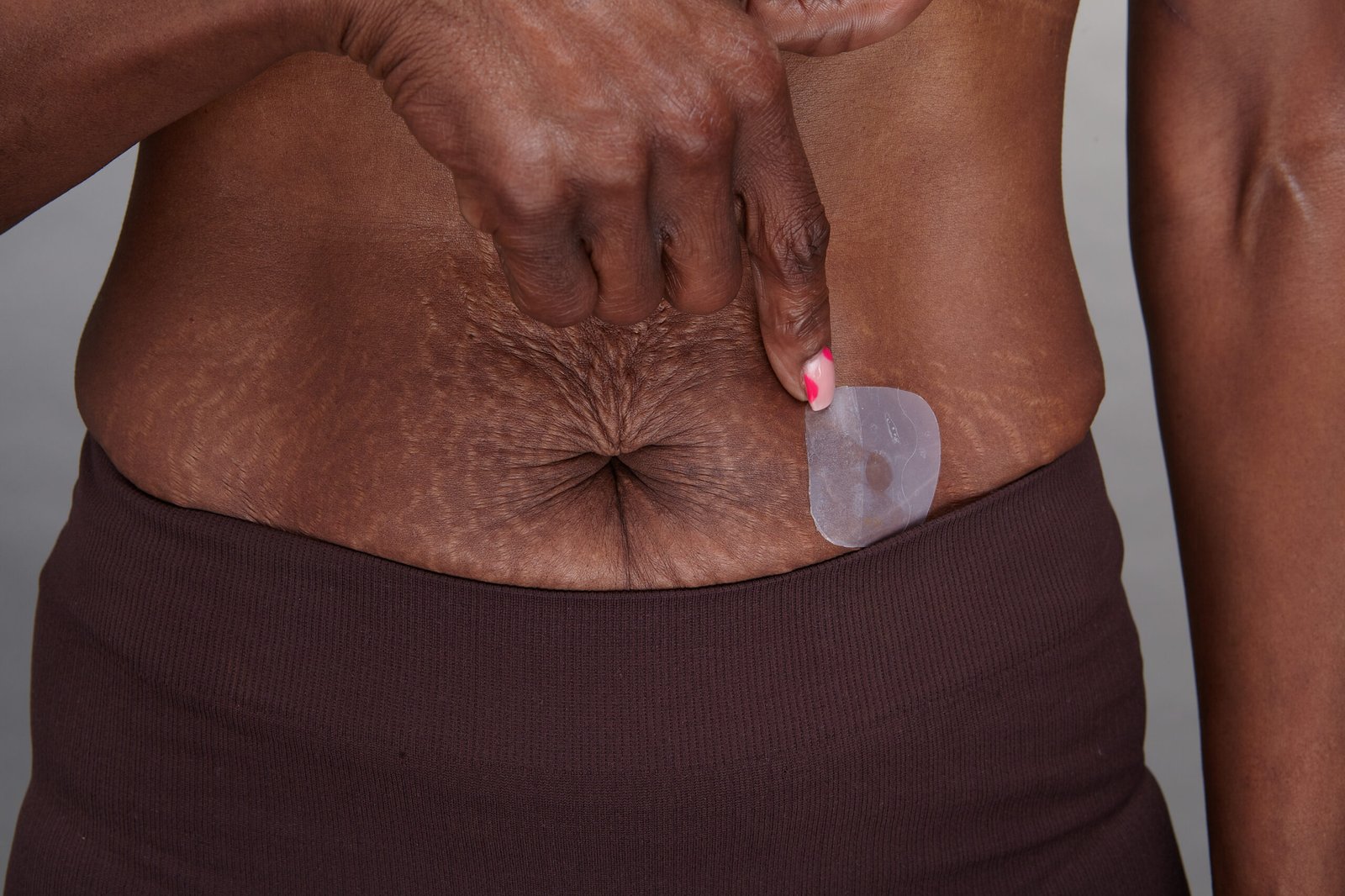
Women across the country are rationing HRT
I sat at my kitchen counter, laptop open, the hum of the train filling the silence between Dr. Vega’s questions.
“Not that I can think of,” I said when she asked if I had any other questions.
I was talking into my laptop. Our appointment was virtual, and we were discussing my hormone replacement therapy.
“There is one thing I was wondering about.” I continued, “My new progesterone pills are orange. All the others I received were white. I assume they’re both progesterone, but I thought that was weird.”
“There’s a shortage,” she responded as if I should’ve known. “We’re having trouble sourcing progesterone and estrogen,” she said matter-of-factly. “If you’re close to being out, you should request a refill now.”
“Have you had any problems with your patches sticking?” she added.
“No. None of my patches have ever come off,” I responded.
Our appointment ended, and before getting up from the barstool, I requested refills for both estradiol and progesterone. After that, I went on with my day. I didn’t think twice about the information Dr. Vega had shared.
A nationwide crisis
A week later, I was scrolling through Instagram and came across a post from a hormone specialist, Dr. Sumner. She was talking about the estrogen patch shortage. Suddenly, the offhand comment from Dr. Vega felt urgent.
From Dr. Sumner’s post, I gathered that women across the country have been pharmacy-hopping, rationing doses, and reducing their prescription to stretch out what they had.
In the comments section, women were sharing stories about calling ten pharmacies, driving miles out of their way, or spacing out patches meant to be replaced twice a week. It became apparent that this was a nationwide crisis.
Some were calling it a conspiracy, saying there’s never been a shortage of viagra. One woman, @allisonamundsen, wrote:
I was wondering if anyone else has experienced this. Finally started getting patches back in stock at my pharmacy, but ever since then, they are not working well at all. This could be a coincidence that it’s time for me to up my dose. In the back of my mind, I’m wondering because of the shortage are they possibly diluting them to produce more quickly?
After listening to Dr. Sumner’s post, I became curious. So of course, I had to research. After digging deeper, I realized this is a real problem, but I hadn’t heard anything about it on the news.
Allegedly, the FDA has been working with the manufacturers to resolve the issue. I say allegedly because many claim they were, at first, refusing to acknowledge the problem.
In early 2026, the FDA didn’t include estradiol patches in its drug shortage database. This was despite the fact that doctors and patients had already been experiencing difficulties obtaining them for several months.
The FDA’s September 2026 announcement was the first time they formally acknowledged the nationwide shortage.
Why is this happening now?
In 2025, the FDA removed its warnings from many of the hormone replacement therapies. After that, more women felt comfortable using estrogen. Thus, prescriptions skyrocketed.
Dr. Vega had walked me through those old warnings when I first started HRT. She emphasized that the benefits far outweighed the risks. She asked me tons of questions to figure out what would work best for my body, and eventually we landed on a plan.
Honestly, I didn’t care about the science. Well, I did. But anybody who is postmenopausal understands what I’m saying. The side effects of estrogen loss were wrecking me. I just wanted my life back.
The “black box” warning labels came from what experts believe was flawed research conducted 20+ years ago. In 2002, researchers from the Women’s Health Initiative study exaggerated the risks of breast cancer because the data primarily focused on older women.
Estrogen patch prescriptions jumped from about 594,000 in June 2024 to 1.6 million in May 2026. That’s a 169% increase. In less than two years, prescriptions nearly tripled.
It’s important to note, as Dr. Sumner mentioned in her post, that switching delivery methods—between patches, gels, and pills—is not advisable if you’re experiencing a shortage.
Each form of estrogen absorbs into your body through a different route. The route determines how the medication enters your body. Each delivery method interacts with your body differently and carries its own risk profile.
For example, patches gradually release hormones with 85–90% bioavailability, while gels fluctuate between 40–60% daily. Pills, on the other hand, have only 2–5% bioavailability because of liver processing. Randomly swapping one method for another could lead to inconsistent dosing.
Sidebar: Did you know that if you place your estrogen patch on your upper buttock, instead of your abdomen, your body will absorbe 15%-25% more of the medication? I also learned this from Dr. Sophia Yen on Instagram. My doctor never told me this!
Here's what you can do if you're in this situation.
Dr. Vega recommended requesting refills 2–3 weeks before running out, because pharmacies can’t guarantee stock.
- So, request your refill early.
2. You can also ask your pharmacy to check with their wholesaler inventory. Pharmacies can see what’s available in their distribution network, even if it’s not on their shelves.
3. Try a small, independent pharmacy. Call ahead to see if they have what you need in stock. Those smaller pharmacies often have medications in stock when the big chains don’t.

4. Ask your Doctor about temporary alternatives. If your usual product is unavailable, ask if there’s a clinically equivalent form that’s appropriate for you.
5. Ask your pharmacist for a partial fill. Some pharmacies can fill a smaller quantity of your prescription while waiting for full stock.
6.If you’re a VA patient, ask about internal supply options. VA pharmacies sometimes have different supply chains than civilian pharmacies.
From everything I’ve read, the estrogen patch shortage is not expected to be permanent, but will likely continue for a while, because it’s not a quick fix.
According to the FDA, manufacturers are increasing production. Six manufacturers are adding production shifts, increasing batch sizes, expanding manufacturing capacity, and accelerating regulatory reviews.
But when the demand for estrogen patches nearly triples in less than two years, it’s going to take a while to catch up.
In the meantime, all we can do is try to maintain our health the best way we can. Sharing this information feels like the least I can do.