
The Secret to Feeling Young Again

Share:

Turning Back the Clock on Aging

What if I told you that you can reverse your biological clock? Would you believe me? And if I showed you exactly how to make your cells young again, would you take the leap?

Yes? Great

But first, let’s step back in time.

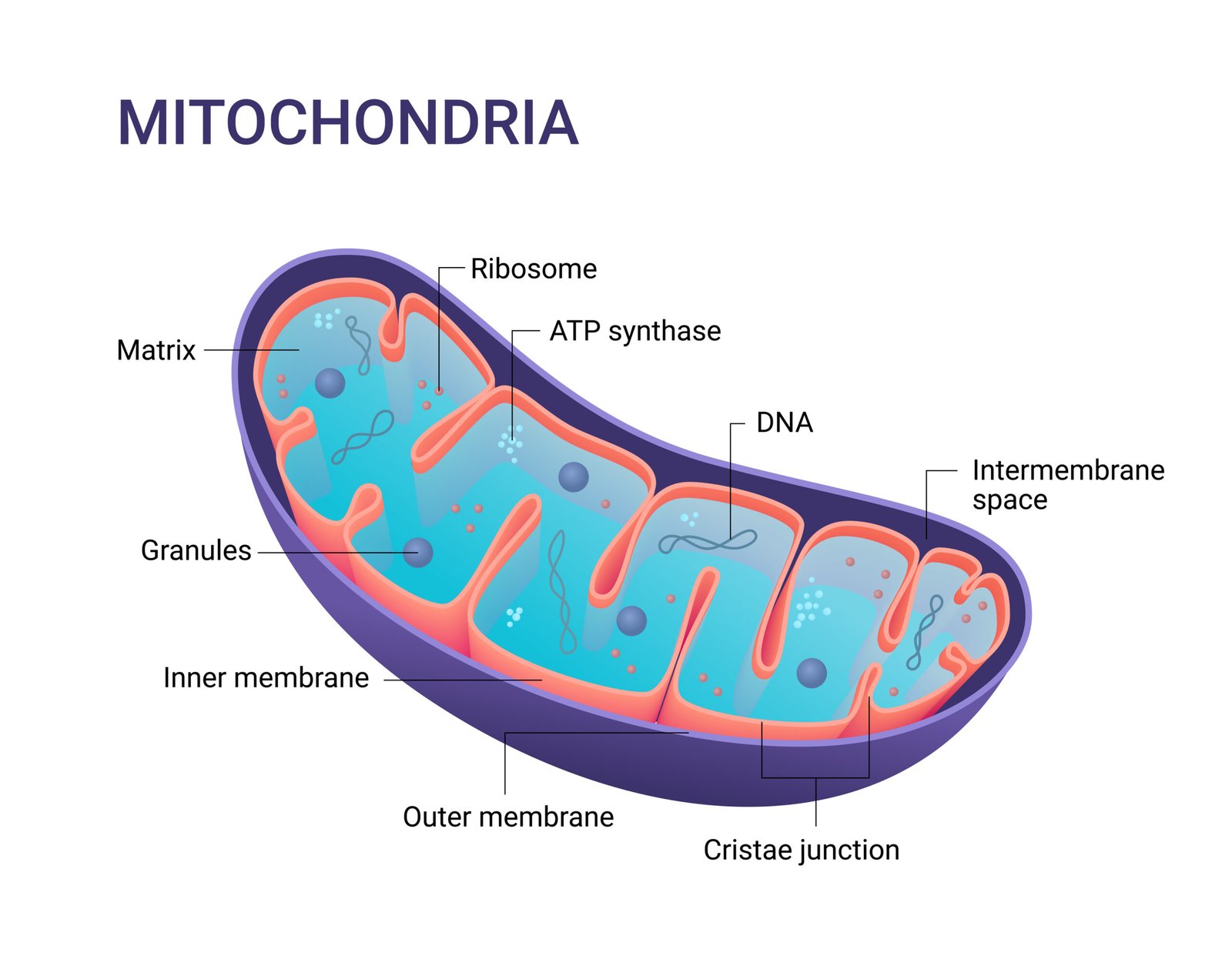
Remember that lesson back in middle school about mitochondria? Your teacher called them “the powerhouse of the cell”. Even if you don’t recall the actual lesson, you likely remember the picture of that little bean-shaped blob-thingy. Back then, mitochondria were just another biology topic, something you memorized so you could label the lima‑bean‑looking thing on the test: the outer membrane, the folded inner membrane, the cristae, the granules, and the DNA.

Lately, I’ve been refreshing my memory and digging into the world of mitochondria and basic cell biology. It’s fascinating! What started as peptide research turned into a lesson on the role mitochondria play in cellular energy and longevity.

I’ve gone deep down the rabbit hole! The funny thing is, I already learned this. Well, kinda. Now that I’ve circled back, I see that the little lima bean plays a big role in our health. 
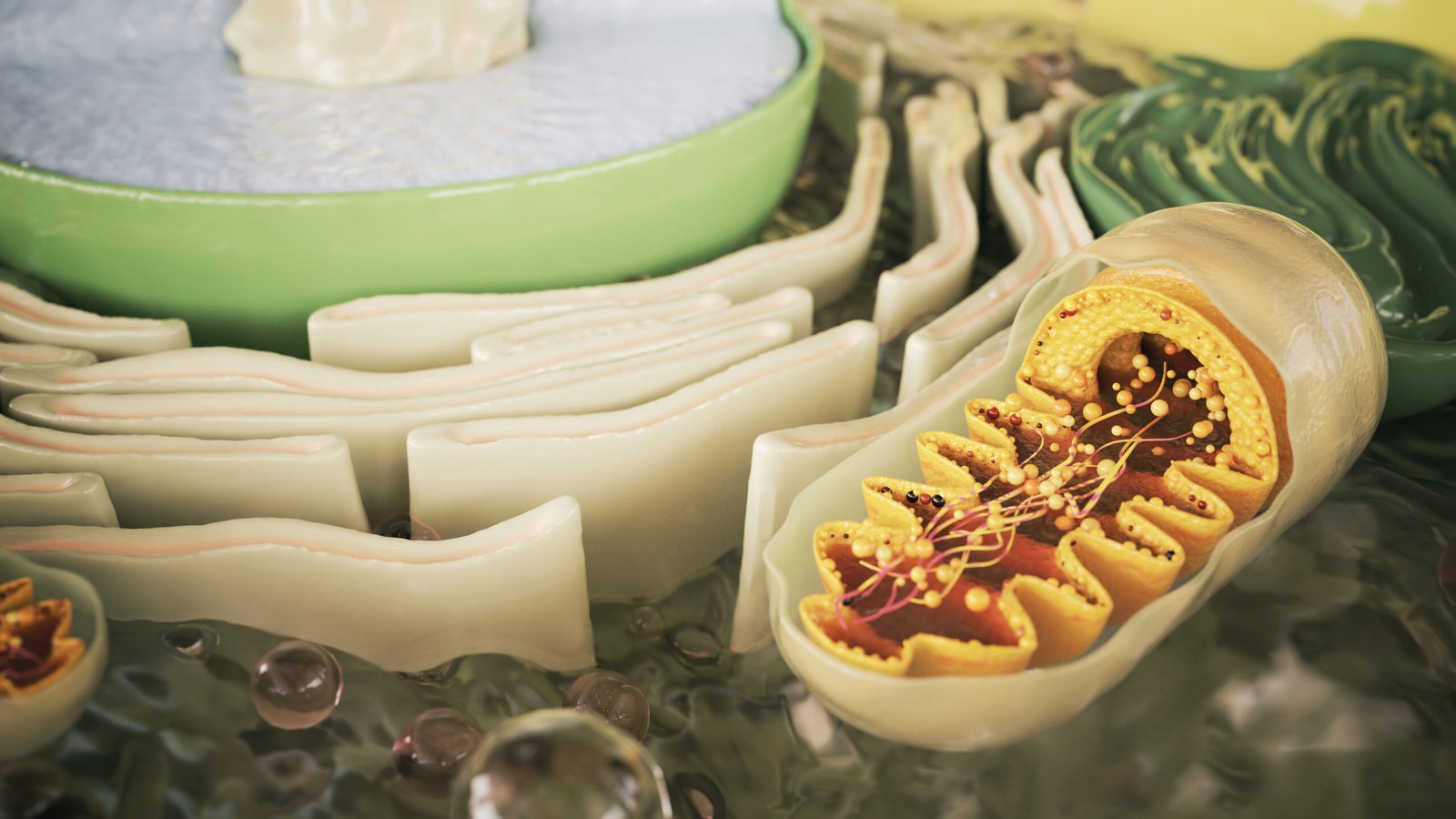

What if aging isn’t a slow decline but a maintenance issue? What if I told you you’re not actually aging! Yes, you’re technically getting older, but you might only feel old because your mitochondria is in need of repair. 

Mitochondria are the body’s cellular engines. They produce ATP, which is the chemical energy currency that powers everything from muscle contractions to cognitive thought. 
By the way, we also learned that in biology class.
But like any other engine, they also generate wear and tear. They produce reactive oxygen species (ROS), a kind of cellular exhaust that gradually damages their own membranes and DNA.
For example, think about your car. Mine alerts me when it’s time for an oil change, a tune-up, or a transmission flush. If I ignore these alerts, the engine will eventually become sluggish or even break down.
Mitochondria behave the same way.
As we get older, our cells accumulate damaged parts: broken proteins, faulty membranes, and worn-out mitochondria. This is where mitophagy enters the picture, or should I say, your body. 

Mitophagy

When mitochondria fail, they don’t just stop working; they become toxic. They leak free radicals, disrupt cellular signaling, and trigger chronic inflammation. This mitochondrial decline is what makes us feel old.
Mitophagy is how your body survives this decline. It’s a targeted form of autophagy (self-eating) where the cell identifies broken, dysfunctional mitochondria, breaks them down, and recycles their raw materials to build fresh, efficient ones.
Mitophagy is essentially your body’s built-in quality-control system. It’s a process that identifies old or dysfunctional mitochondria, breaks them down, and recycles their raw materials to build fresh, efficient ones. 
Think of it as your body’s internal recycling system.

The Brain-Mitochondria Connection

Your brain is the hungriest organ in your body, and for good reason. It burns about 20% of your total energy, even when you’re sitting still. Neurons rely heavily on mitochondria to fire signals, maintain synapses, and store memories. When mitochondrial function declines, the brain feels it first.
Research indicates that defective mitochondrial quality control, or impaired mitophagy, occurs early in neurodegenerative diseases. This supports the theory that promoting mitophagy to maintain mitochondrial health could slow down the progression of dementia.
In Alzheimer’s disease and other dementias, mitochondrial dysfunction shows up early and consistently, which is why mitophagy is crucial in protecting against the many forms of dementia.
This is why researchers are investigating therapies that enhance mitophagy or stabilize mitochondrial function. Small molecules that adjust mitochondrial dynamics, antioxidants that target mitochondria, and gene‑based strategies are all being investigated.
In short, mitophagy is the cellular equivalent of clearing out the engine bay so your body can run clean again. It has a role in so many autoimmune diseases, aging, neurodegenerative diseases, metabolic health, and overall cellular resilience.

Supporting Mitophagy

There are several effective ways to enhance mitophagy in your body. Specifically, peptides, intermittent fasting, and intense exercise act as cellular signals that encourage your body to activate mitophagy.


Research indicates that one method stands out. Exercise. It’s the most reliable, human-validated method to enhance mitophagy. I’m not surprised. We can’t ignore the numerous benefits of exercise, whether we like it or not. 


When you exercise, your muscles naturally require more energy and undergo temporary stress at the cellular level. It also promotes the production and remodeling of healthier mitochondria. 


This means that not only does exercise help your body generate more mitochondria, but it also helps with eliminating those that aren’t functioning properly.

Then there’s intermittent fasting. It’s one of the simplest ways  to activate mitophagy. When you stop eating for a while, your cells are given time to shift from “growth mode” to “repair mode.” 


Without a constant influx of food, your mitochondria become more efficient and start cleaning house. Damaged mitochondria get flagged, broken down, and recycled. Healthy mitochondria multiply.


Fasting also activates AMPK, the energy sensor that maintains energy homeostasis. It then suppresses mTOR, the pathway that keeps cells in growth mode. When mTOR quiets down, autophagy and mitophagy ramp up.


Think of fasting as giving your mitochondria a chance to breathe, reset, and repair.


If you’ve ever fasted, you can vouch for having a clearer mind and better energy after the fast. It’s not all from the fasting itself. Some is from the mitochondrial renewal.

Peptide Research


Exercise and fasting push your body to switch on mitophagy. But there’s also a fascinating class of mitochondrial‑targeted peptides that support repair from inside the mitochondria themselves.
Research groups refer to SS‑31, MOTS‑C, and NAD+ as the Mito Stack. These peptides address three distinct failure points of mitochondrial aging.
SS‑31 (also known as elamipretide) is the mitochondrial repair tetrapeptide. It addresses mitochondrial structural decline and repairs cardiolipin degradation. It received FDA approval in 2025 to treat Barth Syndrome.
MOTS-C is the mitochondrial signaling peptide that activates AMPK, the master energy sensor that triggers the creation of new mitochondria. It’s the peptide that tells your cells: “Build more mitochondria. Adapt. Get stronger,” and it complements SS‑31 and NAD+.
NAD+ is not a peptide. It’s the coenzyme that powers everything by carrying electrons through the electron transport chain. If SS‑31 repairs the mitochondrial membrane, NAD+ fuels the machinery inside it.
Without NAD+, mitochondria can’t make ATP. NAD+ levels decline by roughly 50% between ages 20 and 50, reducing cellular energy, impairing DNA repair, and accelerating metabolic aging.
Together, the Mito Stack forms the conceptual framework that supports mitochondrial health from multiple angles — structure, signaling, and energy.

So what does this mean for you? It means that YOU are in control. Through the science of mitophagy, fasting, and peptides, you can reclaim your vitality. You’re not powerless against aging. 

You can’t control time, but you can influence how your cells respond to it. I’ve been extremely fascinated by this information and am working to repair my mitochondria. I’ve noticed a difference, and you can too. 

Exercise, fasting, and targeted peptides all activate the pathways that restore mitochondrial quality. This isn’t anti‑aging hype or hyperbole — it’s backed by decades of research. 

Are you ready to leap?

SS-31 (Elamipretide)

As we age, mitochondrial efficiency declines, leading to reduced energy production, greater oxidative stress, and accelerated cellular damage. This decline has been linked to fatigue, slower recovery, and a higher risk of chronic disease.The Sczeto-Schiller peptide (SS-31), also known as Elamipretide, is an aromatic synthetic tetrapeptide that is primarily aimed at correcting mitochondrial dysfunction,

Leave a Reply

Your email address will not be published. Required fields are marked *